Post-Op Lymphatic Massage Near Me: The Best Lympathic Drainage Massage for Surgery Recovery In Chicago land
POST-OP LYMPHATIC MASSAGE in ELGIN IL
Serving Chicago clients looking for post-op lymphatic drainage
Swelling after surgery is not just “water weight.” It’s the normal aftermath of tissue disruption, inflammation, and a lymphatic system that’s temporarily overloaded. For some people, that post-op swelling is expected and resolves steadily. For others, it lingers, hardens, pulls, or evolves into something more complex, including fibrosis or even developing into secondary lymphedema (a common occurrence post-mastectomy, for example). Breast cancer swelling support near Chicago, IL can require a different long-term plan than cosmetic swelling.
CERTIFIED LYMPHEDEMA THERAPIST
At The Lymph Current in Elgin, IL, post-operative care is led by a CLT (Certified Lymphedema Therapist) trained in Manual Lymph Drainage (MLD) and advanced post–plastic surgery lymphatic techniques (MLD-PS). That training matters because post-op bodies require precision: the right pressure, the right sequencing, the right timing, and clear safety boundaries, not to mention extensive anatomy and lymph knowledge to ensure proper post-op lympthic drainage. If you’re looking for safe post-op swelling support near Chicago, these are the safety and skill markers you’re trying to find.
This guide explains what post-op lymphatic massage is, who it’s for, and how clinically-informed lymphatic care can support recovery after medical procedures (including mastectomy and cancer treatment) and cosmetic procedures (including tummy tuck/abdominoplasty and body contouring).
POST SURGICAL LYMPHATIC DRAINAGE NEAR CHICAGO
What is post-op Manual Lymph Drainage (MLD)?
Manual Lymph Drainage is a gentle, skin-stretching technique designed to encourage lymph fluid movement through superficial lymph pathways. True MLD is defined by light pressure, specific hand movements, and precise sequencing. It is not deep tissue massage, and it should not be painful. MLD is commonly used as part of Complete Decongestive Therapy (CDT), the standard multi-component approach used in lymphedema care. For lymphedema patients near Chicago, CDT and CLT-led care are often the clinical gold-standard framework. CDT typically includes assessment, compression strategies, manual techniques (which may include MLD), exercise/movement, skin care, education, and self-management.
Two different post-op realities: cosmetic swelling vs secondary lymphedema
Not all swelling is the same, and treating it like it’s the same is where people get into trouble.The Lymph Current is led by a Certified Lymphedema Therapist, who is also specialized in advanced post surgical lymphatic massage for post-op patients (cosmetic and health). For Chicagoland clients, this is the difference between general lymph massage and clinically informed post-surgical MLD. Choosing the right practitioner is essential in post-op care.
POST SURGERY SWELLING RELIEF
1. Routine post-surgical swelling (common after cosmetic procedures)
After surgeries like tummy tuck/abdominoplasty, liposuction, and body contouring, swelling is expected. The lymphatic system is usually intact, but temporarily overwhelmed. In these cases, lymphatic work is often used to support comfort, tissue softness, and fluid reabsorption during recovery. This can also include support for heaviness, tightness, “puffy” tissue, and that end-of-day swelling pattern many clients notice.
Secondary lymphedema is sometimes formed after a health crisis. For example, after breast cancer treatment (including mastectomy, lymph node removal, and/or radiation), the lymphatic system may be structurally impaired. Breast cancer-related lymphedema is common enough that it’s routinely monitored in survivorship care; many sources cite that more than 1 in 5 people treated for breast cancer may develop it. This is why ongoing monitoring + correct drainage strategy matters, not just occasional massage.
If you’ve had a mastectomy or lumpectomy, lymph node biopsy or removal, radiation, or reconstruction, you may notice:
arm, chest, breast, or trunk swelling (example: upper-body swelling after breast surgery)
heaviness, aching, tightness, or “fullness” (example; arm heaviness after lymph node removal)
reduced shoulder mobility or pulling sensations (example: tightness underarm after mastectomy)
tissue thickening or fibrosis over time (Example: lipedema liposuction fibrosis)
swelling that fluctuates with travel, heat, activity, or inflammation
The above 2 different situations require different clinical thinking, different pacing, and a different long-term plan.
CLINICALLY GROUNDED LYMPHATIC THERAPY NEAR CHICAGO IL
At The Lymph Current, the goal is not to “rub swelling away.” If you’re coming for post-op lymphatic drainage, the focus is structured flow + tissue safety, not aggressive pressure. The goal is to evaluate patterns, reduce congestion safely, support tissue quality, and help you build a realistic maintenance strategy.
POST SURGICAL LYMPHATIC DRAINAGE TIMING
Timing matters. Many surgeons and post-op resources discuss starting gentle lymphatic drainage within the first week, but the exact timing must follow your surgeon’s clearance and your healing status. The first 1–8 weeks after surgery are often when surgeon-cleared lymphatic work can make the biggest practical difference in comfort and swelling patterns. Many Chicago post-op clients schedule more frequent sessions early, then taper based on swelling trends and healing. This is when fluid load is highest and tissues are adapting before longer-term density patterns fully set in.
For plastic surgery lymphatic drainage patients, you may be able to start post–plastic surgery MLD very early, depending on your procedure and your surgeon’s clearance Some plastic surgery resources and post-op education sources describe starting gentle lymphatic drainage as early as 24–72 hours after certain procedures, and commonly around day 3–7 for others (including many tummy tuck/abdominoplasty recovery protocols).
At the same time, you’ll also see surgeons recommend waiting longer (sometimes weeks). That longer wait is often driven by caution, complications, or prior bad experiences when patients received overly aggressive or poorly sequenced “lymphatic” work from undertrained providers.
WHY STARTING TOO LATE CAN INCREASE POST OP TISSUE DENSITY
When swelling and inflammatory load stay high for too long, tissue can begin to feel dense, bound, or “stuck,” and some post-op sources associate delayed care with higher risk patterns like fibrosis and fluid pockets. People often describe this online as “lumps,” “hard spots,” “ropey areas,” or “fluid pockets” after lipo or tummy tuck — common Chicago post-op searches. Post-op recovery is a narrow window where gentle, correct sequencing may support comfort and fluid movement while tissues are still adapting. The Lymph Current offers specialty post-op lymphatic drainage with a therapist who holds MLD-PS (Manual Lymph Drainage - Plastic Surgery) and CLT (Certified Lymphedema Therapist) titles, ensuring that whether you are there for cosmetic or medical reasons, you will be taken care of.
The practical standard: starting lymphatic drainage early means surgeon-cleared, gentle, and done by someone trained specifically for post-surgical bodies.
What makes MLD-PS different?
Post–plastic surgery lymphatic work is not “standard spa lymph massage.” If you’re searching post op lymphatic massage Chicago, this is the distinction: spa-style vs post-surgical protocol. Advanced post-surgical lymphatic training is intended for already-certified lymphatic therapists to expand expertise in post-surgical care.
In practice, that means your therapist is thinking about:
surgical pathways and incision protection (incision-safe lymphatic drainage)
safe sequencing that respects healing tissues (proper lymphatic sequencing after surgery)
avoiding aggressive pressure that can inflame tissue or worsen bruising (post surgical lymph drainage specialist)
scar and tissue glide progression when appropriate and cleared (scar mobility timing)
swelling patterns unique to specific procedures (tummy tuck swelling pattern, lipo swelling pattern, or breast surgery swelling pattern)
Important clarification: pushing fluid out of incisions is not post-surgical MLD
Post-op bodies are different than wellness clients. This is why “Brazilian lymphatic massage Chicago” content online can confuse people, post-op drainage is not the same as trend-based depuffing Even among therapists who have standard MLD education, post-surgical work requires additional competency: infection prevention awareness, post-op precautions, scar and fibrosis progression, swelling/seroma considerations, and how to work gently without disrupting healing. For safe post op lymph drianage with a therapist who understands post surgery massage contraindications, choose The Lymph Current.
CLT LED POST OP LYMPHATIC CARE ELGIN IL
The Lymph Current’s post-op care is led by a CLT trained in MLD and advanced post–plastic surgery procedures (MLD-PS), designed to address post-op needs like tummy tucks, liposuction, breast surgeries (including mastectomy), and other procedures where technique, timing, and contraindications matter.
YouTube and DIY “post-op lymph massage” videos are not a substitute for skilled post-surgical MLD
Social media can be helpful for general recovery support, but technique matters. Common issues in DIY videos include:
pushing in the wrong direction (which can increase congestion or irritation)
using too much pressure and creating unnecessary bruising or inflammation
ignoring how lymph pathways may change after surgery (especially after lymph node removal or radiation)
skipping contraindications and red flags that warrant surgeon follow-up
SAFE POST SURGERY LYMPHATIC DRAINAGE
For post-op recovery, especially after medical cancer-related procedures, it’s worth getting eyes and hands from someone trained to assess what’s actually happening in your tissues.
Post-surgical MLD is typically performed with light, rhythmic skin-stretching techniques and precise sequencing. If you’re being told you’re receiving “PS-MLD,” but the session is primarily aggressive pressure, heavy tool work, or intense techniques that spike pain, bruising, or inflammation, that is not aligned with how reputable sources describe MLD.
PROPER MANUAL LYMPHATIC DRAINAGE IS HANDS ON
Tools (like rollers, brushes, or cupping) may be used in other bodywork contexts, but they are not what defines proper post-surgical MLD. If your goal is safe post-op lymphatic drainage, the core of the method should be gentle, hands-on, and incision-respecting, for incision-safe lymphatic drainage.
POST OP LYMPHATIC MASSAGE CONTRAINDICATIONS
Post-op lymphatic work should be postponed (and medical guidance sought) if you have signs of:
infection (fever, spreading redness, heat, worsening pain) (post-op infection signs)
suspected blood clot (DVT), sudden leg swelling, calf pain, shortness of breath
uncontrolled heart failure or severe cardiac symptoms
open wounds that are not cleared for manual work
any post-op complication your surgeon has flagged (seroma concerns, incision issues, unusual swelling)
POST OP MLD SESSION ELGIN IL
Every body is different, but post-op care commonly includes:
a structured intake: surgery type, timeline, drains, compression garments, symptoms, restrictions, clearance status
assessment of congestion patterns (local + whole-system) (swelling pattern assessment)
gentle MLD sequencing to support lymph pathways
fascia-informed tissue strategies when appropriate and cleared (especially as healing progresses and tissues stiffen) (fascia-informed post op care)
education: hydration cues, movement guidance, positioning, self-MLD basics (when appropriate), and recovery pacing (post op recovery pacing support)
POST SURGERY LYMPHATIC DRAINAGE PROCEDURES CHICAGO IL
Post-surgical lymphatic care is often sought after procedures such as:
Liposuction (including Lipo-360) and Body Contouring: Post-op lymphatic drainage can support smoother recovery by helping your body manage swelling and fluid congestion, and by supporting tissue comfort as healing progresses. Many Chicago-area clients seek this kind of support for post-lipo swelling, firmness, and that “puffy, stuck” feeling that can linger during healing.
Tummy tuck/Abdominoplasty and “Mommy Makeover” Recovery: After abdominoplasty, clients often seek surgeon-cleared MLD to support fluid movement, reduce that “tight and full” feeling, and support comfort while tissues recover. This is especially common for Chicago clients who are navigating early recovery swelling patterns and want gentle, correctly sequenced care.
Breast Procedures (Augmentation, Reduction, Reconstruction) and Mastectomy Recovery Support: Post-surgical chest, underarm, and upper-body swelling can be uncomfortable; gentle MLD may support fluid movement, comfort, and easier range of motion as healing allows. For cancer-related procedures, this can also overlap with monitoring for secondary lymphedema and longer-term swelling patterns.
Orthopedic Procedures: Hip, knee, and shoulder replacements (when cleared and appropriate) can come with significant localized swelling and heaviness. Surgeon-cleared lymphatic work may support comfort and congestion patterns during recovery, especially in the early phase when fluid load is high.
BBL Brazilian Butt Lift Lymphatic Drainage: Gentle, correctly sequenced drainage can support post-op swelling management while respecting your surgeon’s restrictions and protecting the integrity of your results. In practice, the focus is comfort, swelling management, and conservative pacing — not aggressive pressure.
Mommy Makeover Post Op Lymphatic Drainage Massage: Combined-procedure recoveries often come with layered swelling patterns and a longer recovery curve, making structured aftercare and careful pacing especially important. Many clients start with higher frequency early on, then taper as swelling stabilizes (always based on clearance and healing status).
Facelift and Neck Lift Lymphatic Drainage: For face and neck procedures, gentle facial lymphatic drainage is often used to help manage swelling and bruising while supporting comfort during recovery. This work is typically very light, precise, and conservative.
Arm Lift Brachioplasty Post Surgery Selling Support: Post-op arm tightness and swelling can feel intense; surgeon-cleared drainage may support fluid movement and tissue comfort as healing allows, along with easier range of motion as stiffness decreases.
Thigh Light Post Op Lymphatic Massage: Thigh procedures can create prolonged lower-body swelling; MLD may support fluid movement from the legs and help clients feel less “stuck” as recovery progresses, especially when swelling pools or lingers.
LYMPHATIC DRAINAGE AFTER SURGERY NEAR ME
After any type of surgical procedure, it’s common to experience:
swelling and puffiness
firmness or tissue density as healing progresses
fluid retention patterns
discomfort that worsens later in the day
restricted tissue glide or “stuck” areas
THE CRITICAL POST SURGERY LYMPHATIC MASSAGE RECOVERY WINDOW
The first 1–8 weeks after surgery are often when surgeon-cleared lymphatic work can make the biggest practical difference in comfort and swelling patterns. This is when fluid load is highest and tissues are adapting before longer-term density patterns fully set in.
Many clients choose a higher frequency early on (often 2–3 sessions per week during the early window), then taper as swelling stabilizes, always based on surgeon clearance, healing status, and what your body is actually doing.
Once the initial swelling is under control, we often shift focus toward tissue quality, supporting comfort, softening areas that feel firm, and helping “settling” happen in a more organized way.
Many clients reduce frequency over time (weekly, then every other week), with the body setting the pace.
Fibrosis Treatment: Smoothing Out Lumps and Hardness
FIBROSIS PREVENTION MASSAGE AFTER LIPOSUCTION AND TUMMY TUCK AND OTHER COSMETIC PROCEDURES
Fibrosis can feel like hardness, lumpiness, or uneven texture under the skin. Once it becomes established, it can be more stubborn to work with.
Prevention of fibrosis is often the easiest path: consistent, gentle, surgeon-cleared MLD during the early phase may help keep tissue more comfortable and fluid moving while healing progresses.
TARGETED SUPPORT FOR EXISTING FIBROSIS
If you already feel areas of density or lumpiness, targeted care may still help significantly—especially when technique is appropriate, pressure is calibrated, and the plan matches your stage of healing.
Maintenance and Long-Term Results
POST OP LYMPHATIC MASSAGE MAINTENANCE
After the initial recovery phase, many clients return monthly or quarterly as a maintenance strategy, especially if they tend to retain fluid, travel often, sit for long hours, or want continued support as tissue remodeling completes.
Think of it like the gym: the initial push gets results, maintenance helps protect and preserve them.
Why Choose a Board-Certified Therapist for Post-Op?
✅ SURGICAL ANATOMY AWARENESS (post op anatomy-informed care Chicago)
We understand surgical anatomy and common post-op lymphatic pathways, and we align your care with your surgeon’s approach and restrictions.
✅ SAFE PRESSURE FOR HEALING TISSUE
We calibrate pressure for healing tissue, using technique that respects inflammation, incision status, and post-op vulnerability.
✅ WE KNOW WHEN TO REFER BACK TO YOUR SURGEON
We know what to watch for, what can be normal, and when something looks outside typical healing patterns—so you can loop your medical team in early.
✅ CLINICAL STANDARD POST OP MLD
Clinical-standard MLD is different than “spa lymph massage.” Post-op care should be structured, safe, and rooted in real training—not internet trends.
Post-op is a time for you to relax and focus on healing. The Lymph Current is here to assist you in your lymphatic drainage. If you’re in Chicago and searching for post-op lymphatic drainage near you, The Lymph Current in Elgin serves Chicagoland clients seeking CLT-led, surgeon-cleared, clinically informed post-surgical MLD
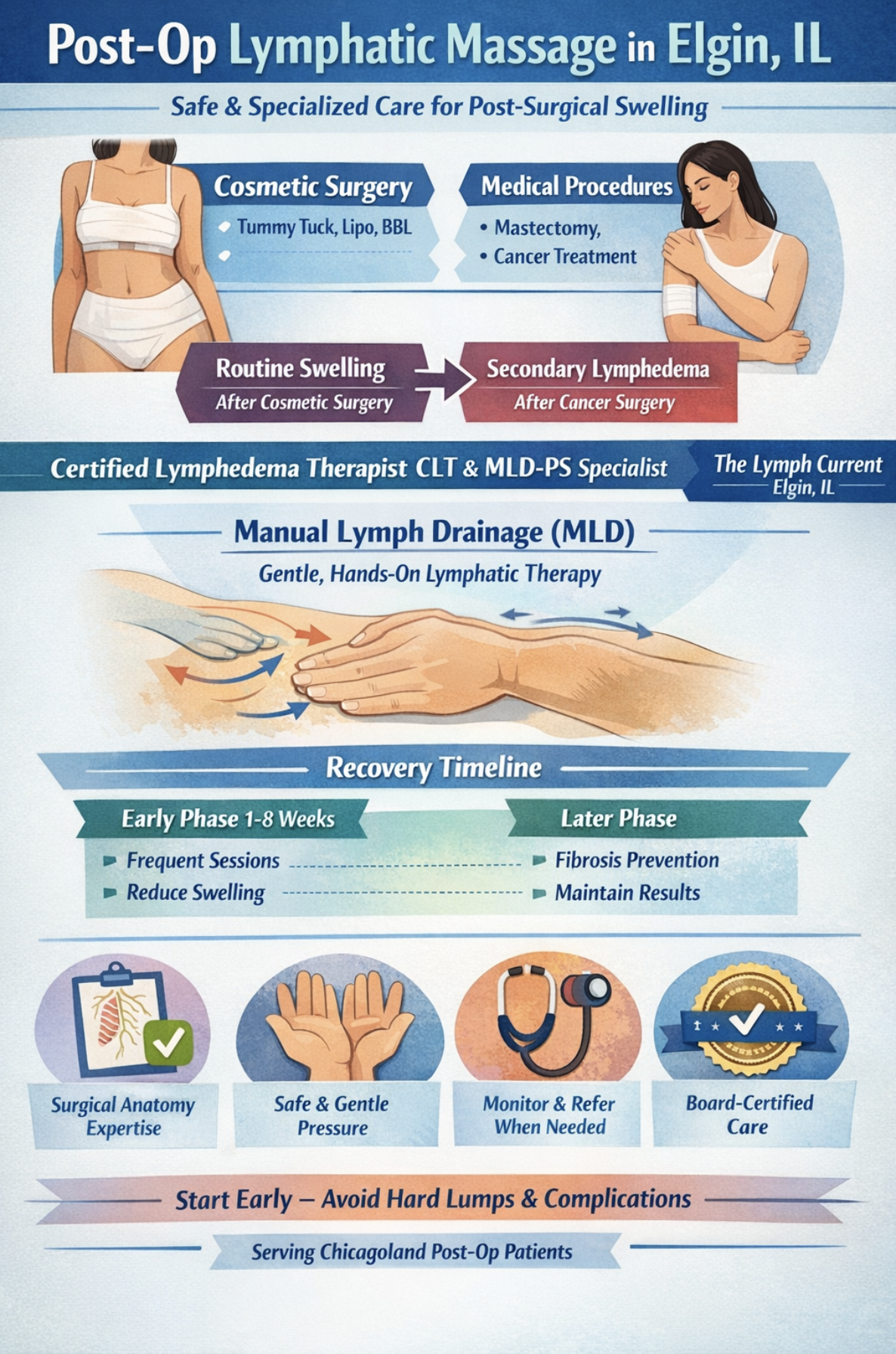
image showcases the service offers of The Lymph Current, a lymph-focused massage practice in Kane County, IL
TOP RATED LYMPHATIC DRAINAGE MASSAGE PRACTITIONER IN ELGIN IL
FAQ
How soon after surgery can I get lymphatic drainage?
It depends on the procedure, your healing status, and your surgeon’s clearance. Many post-op resources describe starting gentle lymphatic work within the first several days for certain procedures (sometimes 24–72 hours, and commonly around 3–7 days for many protocols), while other cases require waiting longer. Your safest timing is always the one your surgeon clears, paired with a therapist trained for post-surgical technique.
Can MLD help after mastectomy?
MLD is commonly used in breast cancer-related lymphedema care, often within a broader CDT approach, and many patients seek it for symptom relief
Is post-op lymphatic massage the same as regular massage?
No. Post-op lymphatic work uses light, specific techniques and sequencing. Deep pressure is generally not appropriate early in healing and can be counterproductive.
Do you work with secondary lymphedema from cancer treatment?
Yes. Secondary lymphedema requires clinically informed assessment and a long-term strategy, not just generalized “drainage massage.”
How many sessions should I do, and how often?
We recommend 2 sessions per week for the first 2 weeks, then adjusting based on how your body responds, your surgeon’s restrictions, and your swelling pattern. The inflammation phase often begins within 24 hours, and it can last two weeks or longer.
What type of methods do you use?
MLD is a long-studied, evidence-based approach used in clinical settings, traditionally associated with the Vodder framework of gentle, rhythmic skin-stretching techniques and precise sequencing. The work is intended to support fluid movement and overall lymphatic function without deep pressure
How does lympathic drainage actually help me?
In simple terms, your tissues need resources delivered and debris cleared. MLD is commonly described as supporting localized circulation and encouraging the movement of lymph fluid so the body can process excess fluid and cellular byproducts more efficiently as part of the larger healing process. The lymphatic system connects with nearly every other system in your body. It supports fluid balance, immune activity, and waste transport. Many people don’t realize how much of “how you feel” after surgery can be influenced by how efficiently fluid is moving.
What about fascia?
MLD may help soften congestion patterns and support comfort, and fascia-informed techniques (timed appropriately and cleared for your stage of healing) can support tissue glide and help scar tissue feel softer and more malleable. Fascia matters in post-op recovery because it influences how tissues move, settle, and integrate over time. Many post-op clients choose to stay consistent into the later stages of healing, when fibrosis and scar tissue changes become more noticeable. This is often when tissue remodeling increases, collagen changes, and areas can feel more dense or restricted.
POST OP MLD SERVICES NEAR ELGIN AND HOFFMAN ESTATES
Post-op recovery can feel intense, especially when the surgery date is close and your mind is trying to run every scenario at once. You are not alone in that. Post-surgical Manual Lymph Drainage at The Lymph Current is designed to reduce confusion, reduce overwhelm, and give your recovery a clear plan—based on clinically grounded lymphatic technique and specialized education in post-surgical care.
If you feel nervous about what swelling will be like, how long bruising will last, or whether your body will “bounce back,” the goal here is simple: support your healing process with gentle, structured work at the stage your body is actually in.